Channel Letters, Halo Letters or a Light Box? How We Decide
Channel letters vs light box — that is the first question most storefront owners ask us. Last month a gas station owner in Texas sent us a photo of his beer cave wall and asked whether he should go halo-lit or backlit. He already had two quotes. Same wall, roughly the same size, and the two quotes looked like two completely different projects.
That’s the part that trips people up. The question isn’t which sign is best, because there isn’t one. It’s that the same brief can be built three ways, and a quote on its own won’t tell you which one you’re buying.
Here is the order we actually decide in, when a customer sends us a wall and a logo.
1. Channel letters vs light box: a word, or a mark?

If people know you by your name — a restaurant, a gym, a dealership, a grocery store — build channel letters. Each letter is its own box with its own LEDs behind the face. You see the letters, not a panel. Nothing else reads as well from a moving car.
If people know you by a symbol, build a light box. One sealed cabinet, one evenly lit face, cut to whatever shape you need. Curves, circles, an irregular logo outline. A light box handles all of that far better than individual letters can, and it is a simpler thing to build, ship and hang.
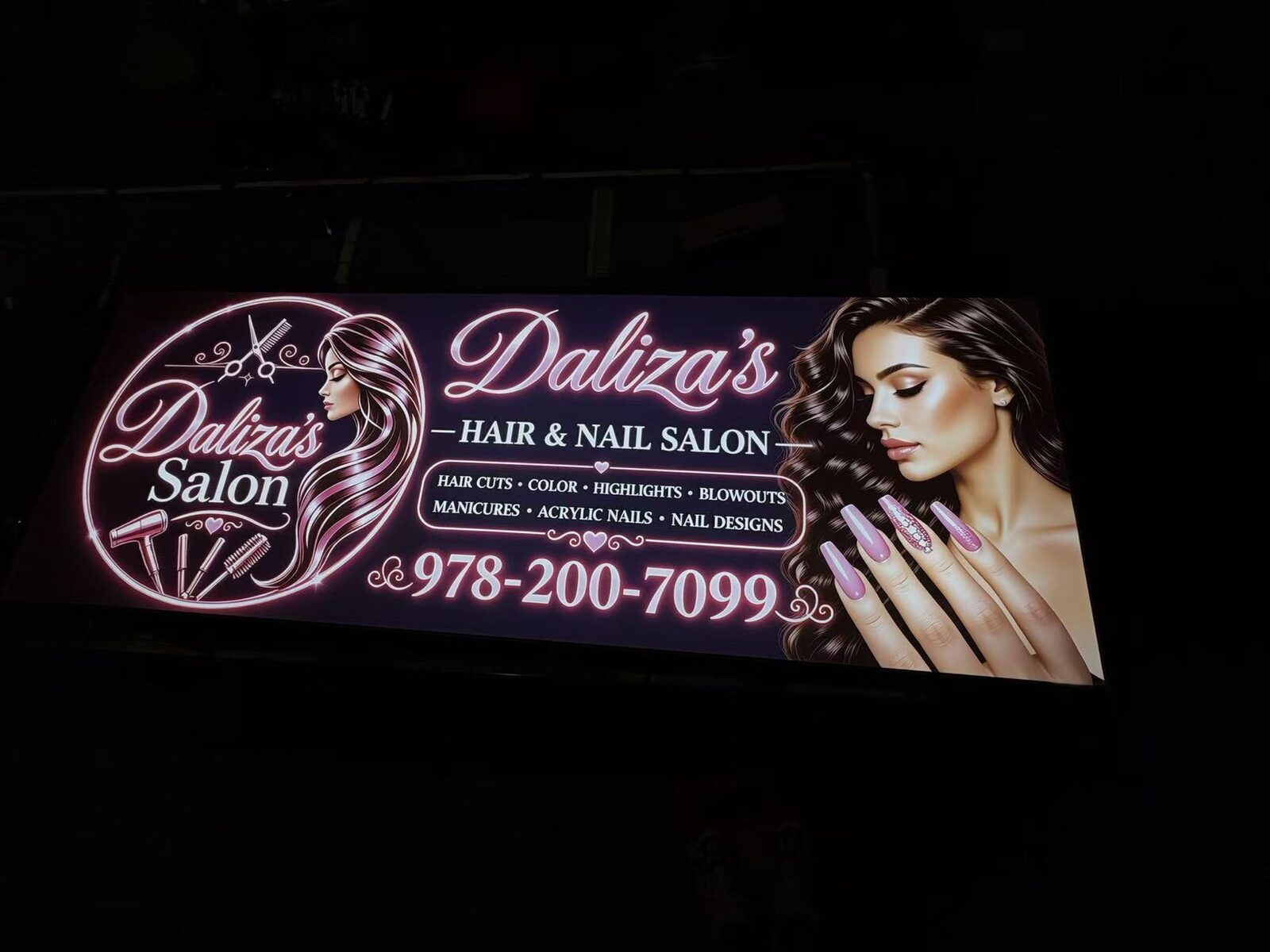
Daliza’s Salon is a good example. Their identity is the mark, not the typeface, so we built the whole thing as one SEG fabric light box. One power point. One panel to mount.
2. How far away does someone need to read it?
A strip mall on a 25 mph road is a different job from a building on a four-lane highway. This is where the channel letters vs light box decision usually settles itself.
Channel letters hold up. We build them at 24 to 40 inches of letter height for highway-facing storefronts, because that is roughly the point where a driver catches the name instead of just a shape.
Halo-lit letters are the opposite. The light never points forward. It splashes onto the wall behind, so what you see from a distance is a dark silhouette sitting in a pool of light. Beautiful at 50 feet. Nearly gone at 200.
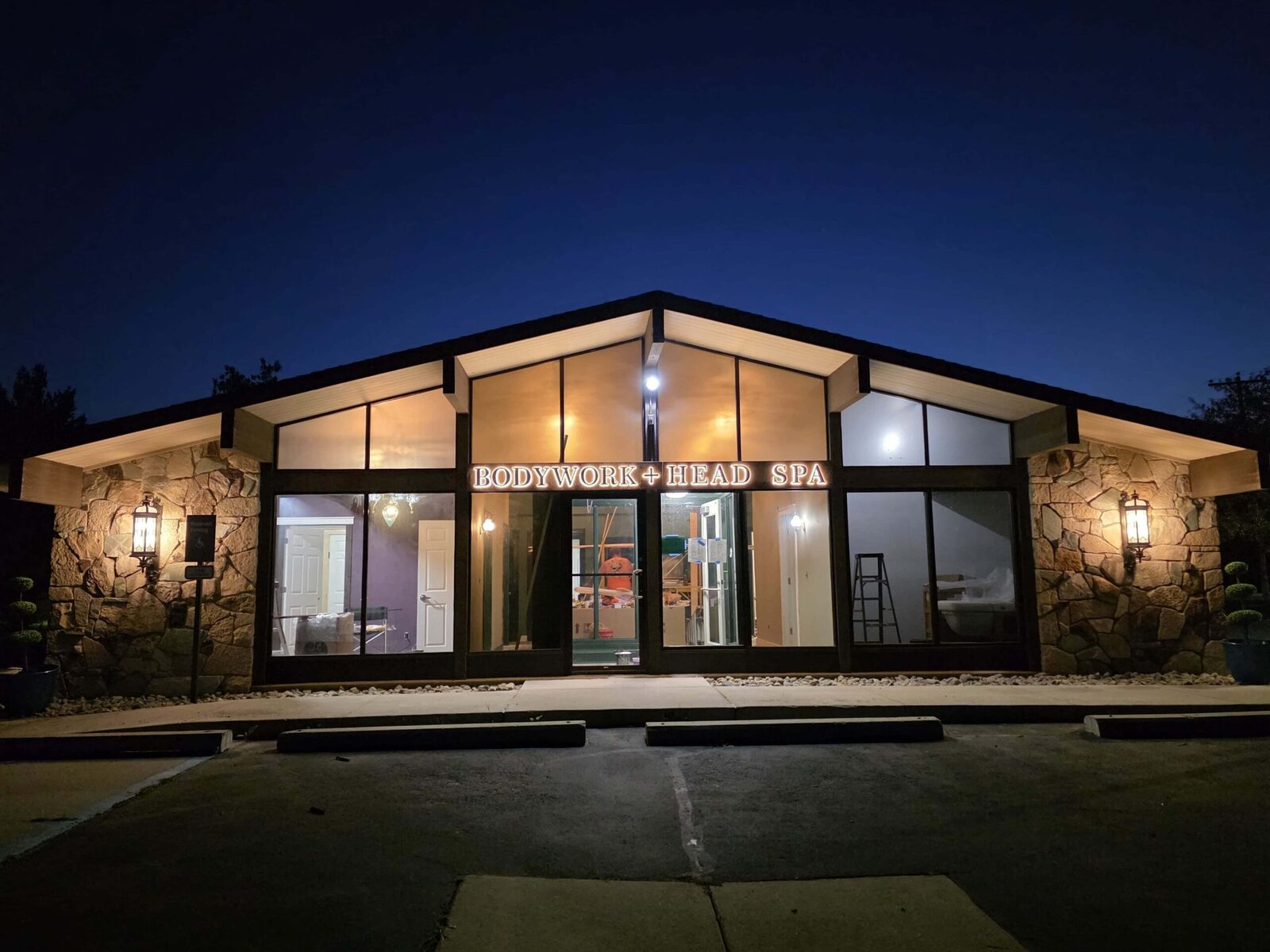
Light boxes sit in between. Even illumination makes them easy to read, but they read as rectangles and circles rather than as words.
3. What colour is the wall?
This one decides more projects than people expect.
A dark brick, black cladding or stone wall is the best possible case for halo lighting. The wall becomes part of the sign. The light does the drawing. It is why so many premium storefronts use it. It photographs well and it looks expensive in a way that is hard to fake.
On white or cream stucco, halo lighting mostly disappears. The contrast isn’t there. If that is your wall, front-lit letters or a light box will do far more for you.
4. “Which one is brightest in white?”
We get asked this almost every week. Front-lit, by a wide margin. The LEDs face forward and the whole face glows.
5. Installation, which is where budgets actually break
This part isn’t on most quotes, and it is usually the difference between a smooth install and a bad month.
Channel letters need power. Either you run a feed to every single letter, or you build a raceway — a metal channel behind the letters that carries all the wiring and leaves you one connection point. The raceway adds metal and cost, but it saves hours of electrical work and looks cleaner. Almost every customer who starts out saying “no raceway” ends up with one.
If your city requires a sign permit, the International Sign Association is a good starting point for local sign codes.
Halo letters need standoffs. Each letter has to float off the wall for the glow to have anywhere to land, which means every letter needs its own mounting point and the wall has to tolerate that.
Light boxes are the easy one. One cabinet, one power point, four anchors. If your electrician is expensive or your schedule is short, this matters more than the sign itself.
What we tell customers who are still torn
Send us a photo of the wall, the width you have to work with, and your logo. We will build mockups of two or three options side by side — same wall, same size, same night-time look. It is free and it takes a couple of days.
It is much easier to choose between pictures than between quotes.
One last thing about channel letters vs light box: neither option is the cheap one. Both are built from the same acrylic, the same LEDs and the same transformers. What changes is the shape of the thing you are buying.
Real projects
- A national franchise storefront in 3D channel letters
- Daliza’s Salon — SEG fabric light box
- Vasilis NY — backlit restaurant sign
- Apex Customs — shield light box
- Bobanest — 3D acrylic sign
Not sure which one your storefront needs?
Send us a photo of the wall and your logo. We’ll mock up two or three options side by side — free.
Get a free 3D mockup