3D Acrylic Letters on Monument Signs: Mounting, Depth and Local Code
The 3D acrylic letters arrive at the site. The masonry base is already there, but nobody has checked the drilling plan. One contractor built the monument. Another company made the letters. The property owner needs both parts to line up before approval.
1. What sits on a monument sign, and who builds which part
A monument sign combines two separate scopes. One scope is the sign structure itself. The other scope is the letter set attached to it.
The structure may include a brick or concrete base, metal posts, stone facing, a foundation, and a panel surface. Those parts are built by the owner's local contractor. We do not make or install the monument structure.
We make the 3D acrylic letters for monument signs. The set can use cast acrylic, extruded acrylic, brushed stainless, or aluminium. Each material has a different edge and surface appearance.
The boundary must be clear before work starts. The local contractor is responsible for the base, framing, cladding, foundation, and site conditions. We are responsible for the letter set and its stated finish.
The local contractor must also confirm that the monument substrate can receive the chosen fasteners. We do not review the structure. We do not approve wall strength. We do not take responsibility for the builder's work.
This split matters for the schedule. The letter set can be produced while the local team builds the monument. Final fixing still depends on the agreed hole pattern and the finished panel.
It also matters for the price. Our published range covers the letter set only. It does not include masonry, concrete, metal framing, stone facing, foundations, local labor, or site installation.
2. Depth for 3D acrylic letters: what 6, 10, 15 and 20 mm do
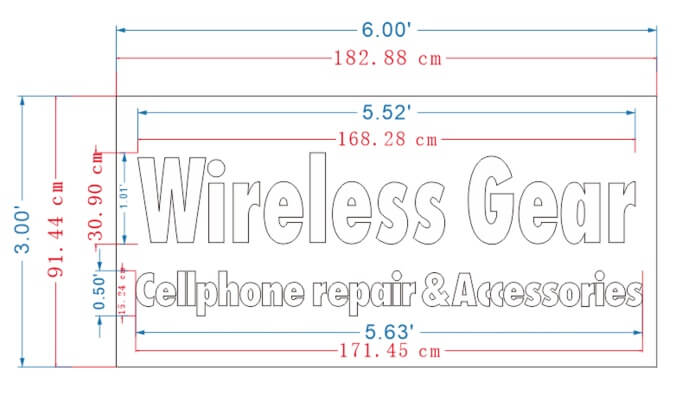
Our published thicknesses for 3D acrylic letters are 6 mm, 10 mm, 15 mm, and 20 mm. Depth changes the visual weight of the letters. It also changes the space needed behind them.
A 6 mm letter creates a light edge. A 10 mm letter has more visible depth. A 15 mm letter gives the face a stronger shadow. A 20 mm letter makes depth a larger part of the design.
The right choice is not always the thickest option. The letter height, font, viewing distance, panel surface, and fixing method all matter. A deep letter can look heavy on a small panel.
The monument panel also affects the result. The local contractor must provide a stable mounting surface at the agreed plane. Any recess, projection, or finish change must be known before the template is approved.
Published letter heights run from 30 mm to 1,200 mm. Larger designs use splicing or layering. The layout must be reviewed before quotation because a join can change the appearance.
Lighting is another planning point. The panel and nearby surfaces can affect how the letter edge reads. The buyer should share the intended lighting condition and a clear site photo.
3. How 3D acrylic letters attach: studs, keyhole plates, standoffs and rails
3D acrylic letters can be fixed with threaded studs, keyhole plates, standoffs, or hidden rails. Each option creates a different hole pattern and installation sequence.
Threaded studs pass through the prepared holes and connect the letter to the monument substrate. Keyhole plates allow a different movement during installation. Standoffs hold the face away from the panel.
A hidden rail can align several letters behind the face. It may reduce visible hardware, but it still needs a planned fixing zone. The local contractor must leave access for installation.
The chosen fixing also depends on the panel material. Brick, concrete, metal framing, and a clad panel do not behave the same way. The local team must confirm the supporting detail.
The back of each 3D acrylic letter must suit the selected fastener. Changing from studs to a rail after production can require new drilling. That change may affect the face, return, and template.
Approval should therefore cover both appearance and installation. The buyer should approve the fixing method before drilling positions are fixed. For a general primer on wall fixing, read how commercial signs are mounted.
4. The 1:1 template, and why the hole positions are settled before anything ships
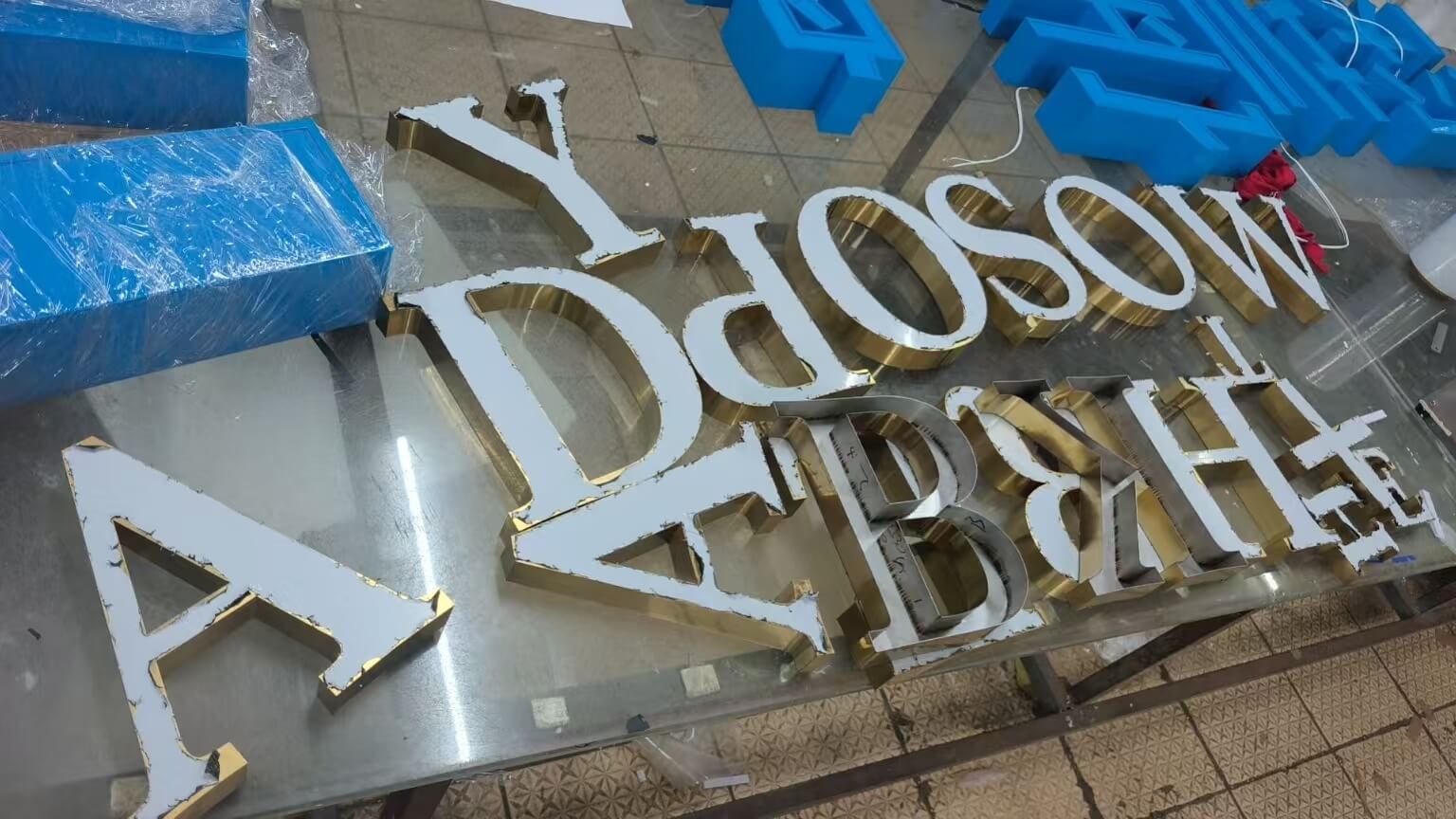
Every hole position on the 3D acrylic letters is marked on a full-size 1:1 paper template. The template carries the agreed layout at actual size. It is a production record and an installation aid.
The local contractor can place the template on the finished panel. The marks can then be transferred to the substrate. This avoids rebuilding the layout from a small drawing.
The template also connects the production and site teams. We use it to set the backs and fixing points. The installer uses it to match those points on site.
The panel must match the approved dimensions. A last-minute size change can move the complete layout. It can also change the relationship between letters and panel edges.
The buyer should review the drawing before the template is released. Check the total width, letter heights, baseline, spacing, and fixing references. Confirm the finished panel dimensions with the local builder.
The approved template should stay with the project record. It helps if a letter is later replaced or the monument is repaired. Ask the local team to keep it after installation.
5. What a permit application usually asks for — and what we can hand you
Permit requirements differ by location and by sign type. The local office controls the process. Nothing in this guide replaces local review or professional advice.
An application often asks for a site plan, a dimensioned sign drawing, materials and finishes, and the proposed fixing method. It may also ask for property and applicant details.
Some offices may request engineering drawings or a document signed by a qualified local professional. We do not sign or stamp engineering documents. We do not provide engineering drawings for the monument structure.
We can provide a dimensioned drawing for the 3D acrylic letters. We can also provide the 1:1 paper template with the agreed hole positions. These files show what we make, but they do not approve the structure.
If the drawing mixes units, state the required convention clearly. Some permit drawings are annotated in inches rather than millimetres. Use this explanation of inches to centimetres only for unit conversion.
The local office should confirm its own requirements. Ask which drawing format it accepts. Ask whether a licensed local professional must prepare or seal any document.
Do not rely on a generic online checklist for final approval. The owner and local team must review the site, structure, and application package. We can supply product dimensions and fixing information for that review.
6. What to send us for an exact price
Start with the wording or logo and the required heights for the 3D acrylic letters. Include the quantity and the finished overall width if known. State whether the letters will be indoors or outdoors.
Send a clear photo of the monument panel and the surrounding site. Add any drawing that shows the available area. Include the local builder's planned panel depth if it is already known.
Choose the material and finish where possible. Available finishes are solid Pantone, mirror, brushed, cast crystal, and film-faced. If you have no decision yet, send a reference photo and describe the intended effect.
Tell us which fixing method the local team expects. Threaded studs, keyhole plates, standoffs, and hidden rails create different templates. Confirm the finished panel dimensions before the template is approved.
For a US delivery, include the destination postal code. Our published letter-set price is $650-$1,800 USD. It is DDP to a US address and includes duties, but it excludes the monument structure. For the wider cost picture, read what a custom commercial sign costs.
Payment terms are 50% deposit, with the balance due after factory photos are provided. Production is quoted at five working days after sample approval. DDP air transport is 12-20 days. For a full production timeline, read how long a custom sign takes.
Our Guangzhou workshop uses CNC cutting and flame polishing. The full routed process is explained in how 3D moulded letters are made. The available materials are cast acrylic, extruded acrylic, brushed stainless, and aluminium. We do not use injection moulding or vacuum forming for this letter set.
FAQ: Do you build the monument structure?
No. We make the letter set only. Masonry, concrete, metal framing, stone facing, foundations, and site installation stay with the owner's local contractor.
FAQ: Does the price include the base or installation?
No. The published $650-$1,800 USD range covers one letter set, DDP to a US address with duties included. It excludes the monument structure and local labor.
FAQ: Can you provide a stamped engineering drawing?
No. We do not sign or stamp engineering documents. Any sealed drawing required by the local authority must come from a qualified local professional.
FAQ: What drawing and template do you provide?
We provide a dimensioned drawing for the letter set. We also provide a 1:1 paper template with every agreed hole position marked.
Send the panel size, wording, and site photo
Tell us what the local monument builder can provide. Include the letter heights, material preference, fixing method, and destination postal code.
Get a free 3D mockup