What Are 3D Infinity Mirror Signs? How They Work, Cost & Uses
3D infinity mirror signs are shallow boxes with a partially reflective front panel and a mirrored back panel. LEDs hidden around the inside edge bounce back and forth between the two surfaces, and the eye reads that as a tunnel of light that seems to run forever. Businesses use them as logo signs, tunnel displays and photo backdrops that pull people across the room.
How 3D Infinity Mirror Signs Work
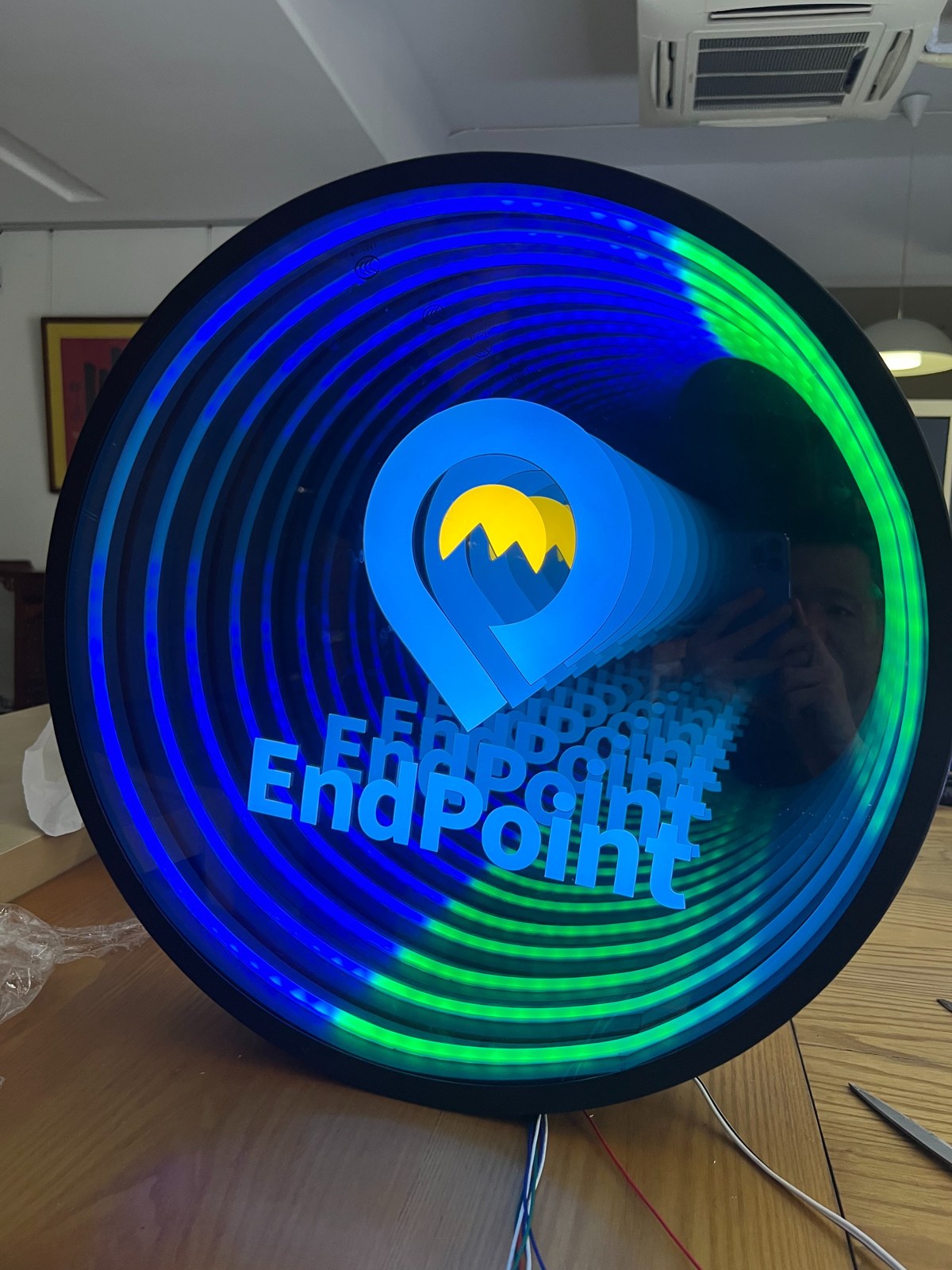
The trick is two mirrors facing each other — the classic infinity mirror effect. The front is a one-way mirror film — partly transparent, partly reflective — and the back is a normal mirror. When the LEDs light up, part of the light leaves through the front and part reflects back, over and over. Each bounce is a little dimmer and a little smaller, so you see a receding row of lights and a sense of depth that is not really there.
The "3D" part comes from shaping the lit channel. Instead of a plain rectangle, the LED track can follow a logo outline, a tunnel, or a star shape, so the repeating pattern reads as a glowing 3D object rather than a flat panel.
The depth of the box changes the effect more than most people expect. A shallow 3–4 inch frame gives a tight, fast-repeating tunnel; a deeper box spaces the reflections further apart and makes the tunnel feel longer, though each bounce is a little dimmer. We set the depth to match the look the client wants, not just to fit the frame.
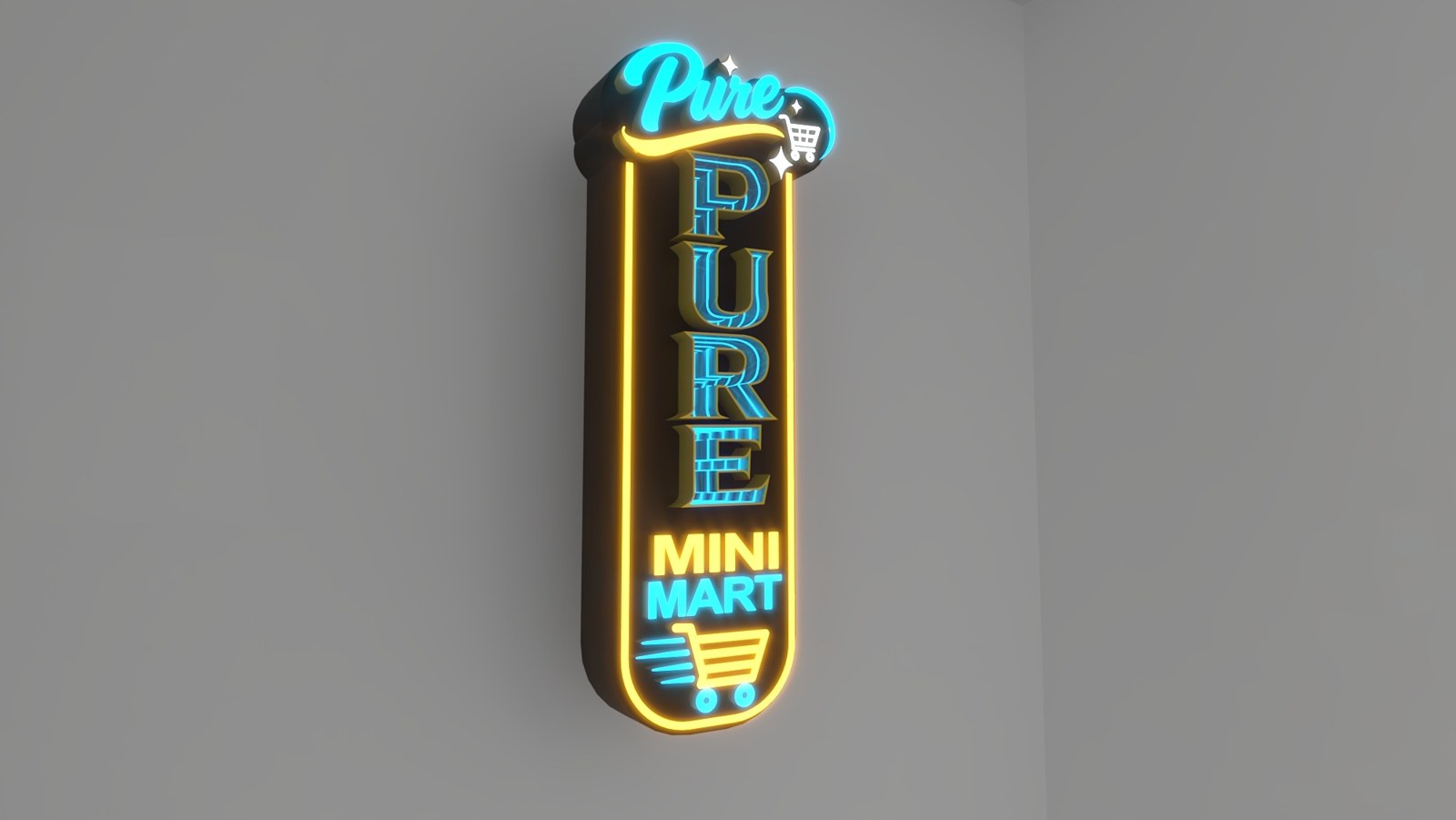
What a 3D infinity mirror sign looks like
There is no single shape. The two most common builds are:
- Logo-shaped infinity signs. The lit track is cut to a brand mark, so the logo appears to repeat into the distance. Ideal for restaurant bars, breweries and retail.
- Tunnel and portal displays. A rectangular or circular opening with a full infinite corridor effect — popular for events, photo booths and entertainment venues.
Both can be built as a single-sided sign or a double-sided display, and both look completely different lit and unlit: unlit it is a clean mirror panel, lit it becomes the tunnel.
Single-sided vs. double-sided infinity signs
A single-sided infinity sign is viewed from one side: the one-way mirror faces the customer and the back of the frame is plain. A double-sided unit puts a one-way mirror on both faces so the tunnel can be seen from either side, which suits a free-standing or suspended display. Double-sided builds cost more, because the lit channel and the frame both have to work from two directions.
Where businesses use 3D infinity mirror signs
The sign works best where a business wants a focal point, not just a name. We build them for:
- Bar and brewery back-bars, where the infinity effect pulls the eye across the room.
- Retail interiors and fitting rooms, as a branded mirror and photo moment.
- Event and exhibition booths, where an infinity tunnel stops foot traffic.
- Hotel lobbies, cinemas and entertainment venues that want a light feature rather than a menu board.
They also show up in LED neon and RGB light installations, where the infinity panel becomes the animated centerpiece.
LED color and control
Single-color white gives the cleanest tunnel and the sharpest repetition. Dynamic RGB modules let the tunnel change color, chase, or pulse to music — the effect is strongest when the whole run is addressable, so the color can travel along the channel instead of only switching as a block. Control is usually app or remote; we wire the driver so the whole sign runs from one standard US plug.
How much do 3D infinity mirror signs cost?
Price follows the lit length of the LED track, the size of the mirror panel, and whether the run is single-color or addressable RGB. A small photo-moment panel sits at the low end; a large logo-shaped RGB tunnel with a custom-cut one-way mirror and a sealed aluminum frame sits at the high end. Because everything ships DDP to the USA, the quote already includes freight, duties and delivery. A custom shape always costs more to make than a rectangle, so send the artwork and size for an exact number.
Care and cleaning
The front is a mirror surface, so treat it like one: dust with a soft, dry microfiber cloth and skip ammonia or abrasive cleaners that cloud the film. The LEDs are sealed inside the frame, so there are no bulbs to change in normal use. If a driver ever fails, it is a plug-in swap at the edge of the frame, not a full rebuild.
Custom vs. off-the-shelf
Off-the-shelf infinity mirrors are usually fixed-size rectangles with a set LED color. A custom build lets you set the exact size, the shape of the lit track, the LED spacing, the mirror tint and the control method — and it lets the frame match your wall. For anything going above a bar or behind a reception desk, the custom version is what makes it look designed rather than bought.
FAQ: 3D infinity mirror signs
Are infinity mirror signs safe to look at?
Yes. The effect is created by LEDs bouncing between two mirrors, not by a laser or an open light source. Brightness is set so the tunnel stays comfortable to look at from normal viewing distance.
Can I use my logo as the shape?
Yes. We can cut the lit track to your logo, or use an infinity tunnel behind a cut logo panel. Send vector artwork (AI, EPS or SVG) and we will check what reads clearly as an infinity shape.
Do infinity mirror signs need a lot of power?
No. They use low-voltage LED modules on a standard 12V or 24V driver and plug into a normal US outlet. Power draw is closer to a large TV than to a lighting fixture.
Can it be mounted on any wall?
Most are hung like a large picture or fixed with a Z-clip. For heavy or oversized panels we design the bracket into the frame so the load goes into the structure, not the wall finish.
How long does a custom infinity mirror sign take?
Typical production is 10–18 working days depending on size and complexity, plus shipping. Express air DDP runs about 12–20 days in transit; ocean DDP about 30–45 days.
Related reading
- Custom infinity mirror signs for business — product and specs
- Dynamic RGB signs (app-controlled color)
- How much does a custom commercial sign cost?
Want a 3D infinity mirror sign for your space?
Send your logo, the wall size and a photo. We will return an infinity layout and a DDP quote within 24 hours.
Request a free 3D mockup — reply within 24 hours Get an infinity quote →