LED Sign Brightness: What LED Brand Do We Use?
When ordering an illuminated storefront sign, business owners always ask about LED sign brightness and the exact brand of LEDs inside. They want to know if their storefront will stand out on a busy street or look dim.
This is one of the questions I receive most often. Store owners in North America want to make sure their sign performs well and meets permitting requirements or landlord requirements. Over the years, we have built and shipped more than 500 custom sign projects. I will explain how we select LED modules, power supplies, testing, and the final component setup for each sign.
1. What LED brand do we use?
We do not use one LED brand for every sign. LED modules are selected according to the project’s brightness, color temperature, voltage, IP rating, and control requirements. The final brand and model are confirmed on the PI.
Some projects call for specific high-efficiency chips, while others use specialized high-output modules designed for deep channel letters. The exact LED module brand, model, and configuration for your order will always be specified in your formal Proforma Invoice. If you are comparing quotes, make sure your supplier tells you what components are inside your sign.
2. What controls LED sign brightness?
Many factors influence how bright a sign looks once it is installed on your exterior wall. Brightness is not determined by the LED chip alone.
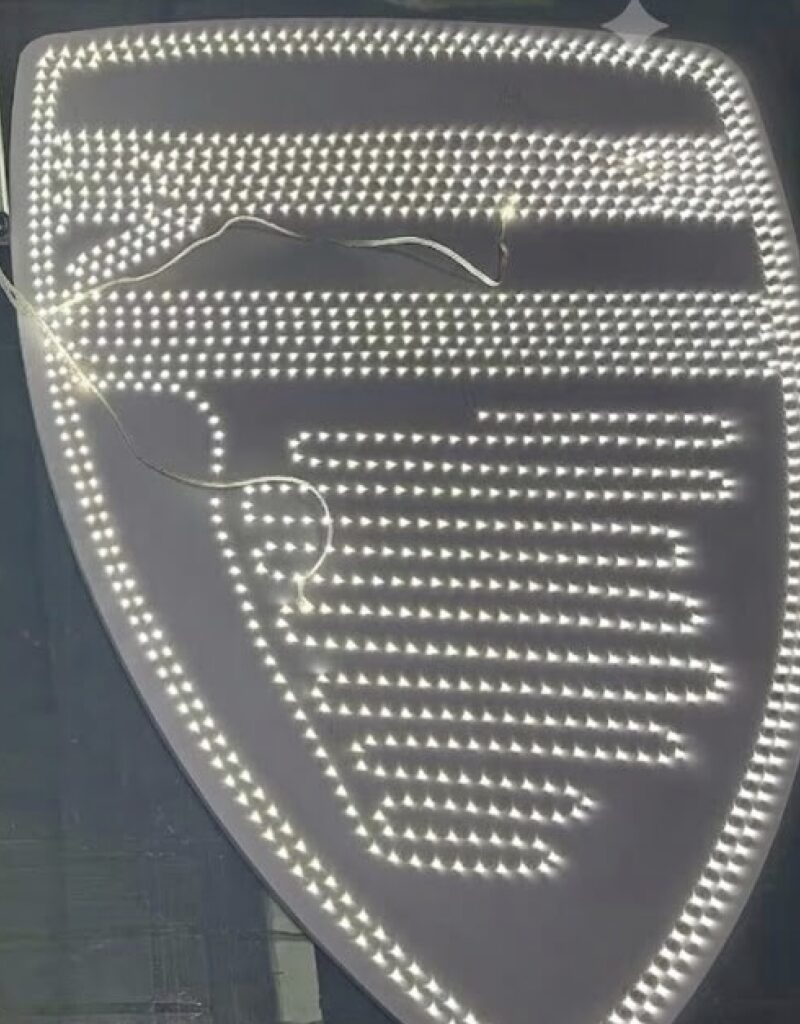
It depends on the LED module’s luminous flux. It also depends on the density of modules inside the letter or light box. The depth of the return walls and the light transmission rate of your acrylic face material play a role too. If a sign is too dim, it gets lost against streetlights. If it is too bright, it can cause glare or violate local municipal brightness rules. To see how illumination and materials affect overall sign pricing, you can check our guide on how much a custom commercial sign costs.
3. LED module, power supply, diffusion and face material
An illuminated sign is a complete electrical system, so the parts have to work together.
We pair our LED modules with dependable power supplies. We often use Mean Well drivers. These units provide stable 12V or 24V output with built-in protection features. Beyond the LEDs and power supply, the acrylic face material acts as a diffuser. A quality casting acrylic diffuses light evenly across the letter face, reducing hot spots and shadows. To see what hardware, wiring, and power supplies are included, read our guide on what a sign quote includes.
4. Color temperature
Color temperature changes how your brand looks at night. Choosing the wrong Kelvin rating can make a warm restaurant look cold or a modern office look dim.
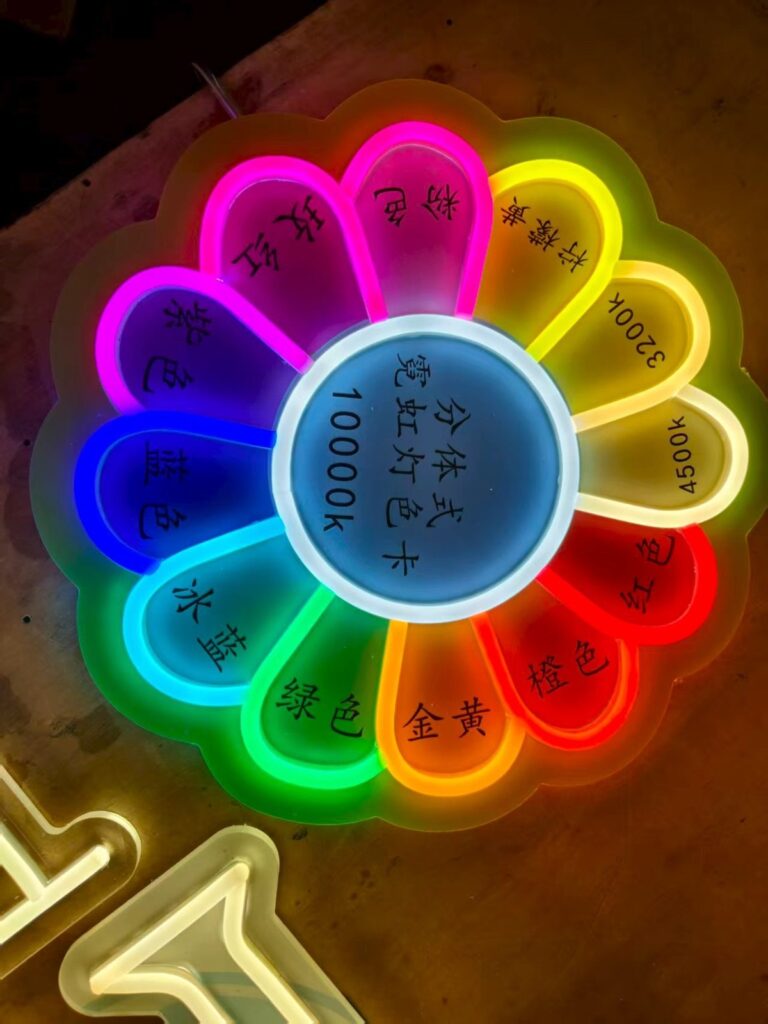
We offer warm white (3000K) for retail stores and restaurants that want a cozy feel. We offer neutral white (4000K) for balanced everyday visibility. We also offer cool white (6500K) for maximum punch on busy commercial strips. We match the right Kelvin rating to your brand guidelines so your colors look correct after dark.
5. Front-lit vs halo-lit vs light box vs RGB brightness
Different sign structures manage light in entirely different ways:
- Front-Lit Channel Letters: Direct light through translucent acrylic faces for maximum brightness. Explore our channel letters collection.
- Halo-Lit Signs: Light casts backward against the wall, creating a glow ring. Explore our reverse halo signs collection.
- Light Boxes: Evenly lit face panels designed for full-color graphics. Explore our light boxes collection.
- Dynamic RGB Signs: Programmable color-changing setups for entertainment venues. Explore our dynamic RGB signs collection.
6. IP67 and weather protection
Outdoor signs face harsh elements, from freezing winters down to heavy rain and summer humidity. Moisture ingress can damage electrical components in outdoor signs.
The outdoor LED modules we specify are IP67-rated. This means the module is sealed against water and dust. We also seal all interior wiring junctions with weatherproof silicone and provide drainage holes to prevent condensation buildup inside large letters.
7. Why 48-hour burn-in testing matters
We test every completed sign in our workshop before it is packed for shipping.
We run a continuous 48-hour burn-in test on all electrical components. This stress test helps identify weak solder joints, flickering LED modules, or unstable power drivers in our factory before installation on your building facade. For an inside look at our workshop standards, visit our sign manufacturer page or browse our completed projects in our portfolio.
8. Component certificates and compliance
Many municipal sign permit offices and landlords require proof that electrical components meet recognized safety standards.
Please note that these are supplier-provided component certificates for the listed component or model. They are not a certification for the entire custom finished sign structure. The exact component brand and model used in your build are detailed in your PI. For safety standards and testing frameworks, you can review guidelines from organizations like UL. You can download our relevant supplier component documents here:
- UL Recognized Component Certificate (E334687)
- UL Mark Safety Scheme Certificate (24V LED Module)
- CE Certificate for Injection Molded LED Module
- CE EMC Test Report (EN 55015 & EN 61547)
If you need help visualizing how your sign layout looks before production, you can request a preview through our custom sign mockup guide.
9. What to ask any sign supplier
When getting quotes for your storefront, do not just look at the bottom line price. Ask these practical questions:
- What specific LED voltage and module type are you using?
- What brand of power supply is included?
- Are the LED modules rated IP67 for outdoor weather protection?
- Do you perform burn-in testing before shipping?
10. Frequently asked questions
What LED brand do you use?
LED modules are selected according to the project’s brightness, color temperature, voltage, IP rating, and control requirements. The final brand and model are confirmed on the PI.
How bright will my sign be?
Brightness depends on the sign type, size, viewing distance, color temperature, and installation position. We match the LED modules to those factors, and the final specification is written on your PI.
What color temperatures are available?
We provide standard options including warm white (3000K), neutral white (4000K), cool white (6500K), and custom RGB color-changing systems.
Can the LED sign brightness be adjusted?
Yes. If you want the option to dim your sign at night or control lighting schedules, we can supply compatible LED dimmers and remote control systems upon request.
Why do I need UL/CE component files?
Sign permit inspectors or landlords often request documentation proving that internal electrical parts meet recognized safety standards. We provide supplier component test reports and certificates for your records.
What is the purpose of the 48-hour test?
Our 48-hour burn-in test checks the electrical connections and power drivers before the sign is crated and shipped.
Ready to See Your Storefront Sign?
Send us your logo, wall photo, size, and ZIP code. We will put together a professional preview for your business.
Get a Free 3D Mockup on WhatsApp